
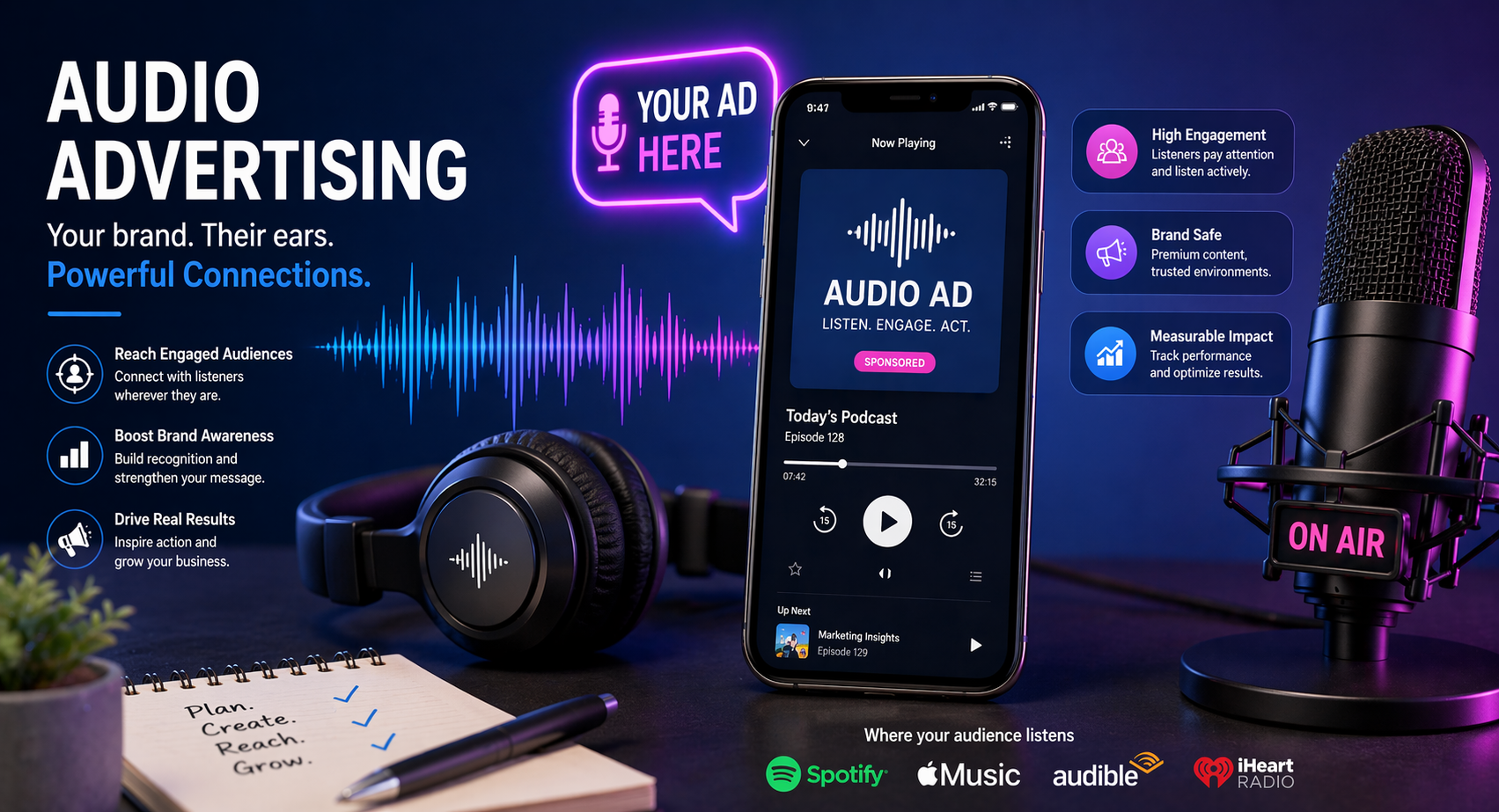
Introduction to Audio Advertising News
Audio advertising is evolving faster than ever. With the rise of podcasts, streaming platforms, and smart devices, brands are shifting their focus to audio-first strategies. This audio advertising news guide explores the latest developments, helping marketers stay ahead in a competitive digital landscape.
Today, consumers are spending more time listening rather than reading or watching. As a result, audio ads have become a powerful tool for engagement, storytelling, and brand recall.
What Is Audio Advertising?
Audio advertising refers to promotional content delivered through audio channels such as:
- Podcasts
- Music streaming platforms
- Internet radio
- Smart speakers
- Voice assistants
Unlike traditional ads, audio ads rely on sound, voice, and storytelling to connect with audiences.
Why Audio Advertising Is Growing Rapidly
The surge in audio consumption has transformed how brands communicate.
Increased Podcast Popularity
Millions of users tune into podcasts daily, making them ideal for targeted advertising.
Mobile-First Behavior
Smartphones allow users to consume audio content anytime, anywhere.
Hands-Free Convenience
Audio content fits seamlessly into daily routines like driving or exercising.
9 Powerful Trends in Audio Advertising News
Staying updated with audio advertising news helps marketers make smarter decisions.
1. Programmatic Audio Advertising
Automated ad buying is improving targeting and efficiency.
2. Personalized Audio Ads
Brands now tailor ads based on user behavior and preferences.
3. Growth of Podcast Advertising
Podcast ads deliver high engagement and trust among listeners.
4. Voice Search Integration
Voice assistants are reshaping how users discover brands.
5. AI-Driven Audio Content
Artificial intelligence is enhancing ad creation and targeting.
6. Interactive Audio Ads
Listeners can now engage directly with ads through voice commands.
7. Localized Audio Campaigns
Geo-targeting helps brands reach specific audiences effectively.
8. Branded Podcasts
Companies are creating their own shows to build authority.
9. Data-Driven Insights
Advanced analytics are improving campaign performance.
Key Benefits of Audio Advertising
Audio advertising offers unique advantages over other formats.
- High engagement rates
- Strong emotional connection
- Less competition compared to visual ads
- Better multitasking compatibility
- Cost-effective campaigns
How Audio Advertising Works
Audio ads are delivered through streaming platforms using targeting technologies.
Types of Audio Ads
- Pre-roll ads (before content)
- Mid-roll ads (during content)
- Post-roll ads (after content)
- Sponsored segments
Each format serves a different purpose depending on campaign goals.
Best Practices for Effective Audio Advertising
To maximize results, follow these proven strategies:
Keep It Short and Clear
Attention spans are limited, so concise messaging works best.
Use Strong Voiceovers
A professional voice builds trust and credibility.
Focus on Storytelling
Stories create emotional connections with listeners.
Include a Clear Call-to-Action
Guide listeners on what to do next.
Common Challenges in Audio Advertising
Despite its benefits, audio advertising has some limitations.
- Lack of visual elements
- Difficulty in measuring engagement
- Ad skipping on some platforms
However, new technologies are addressing these issues.
Future of Audio Advertising
The future looks promising. With AI, smart devices, and data analytics, audio advertising will become more personalized and interactive.
Brands that adapt early will gain a competitive edge.
FAQs
1. What is audio advertising?
Audio advertising involves promoting products or services through audio platforms like podcasts and streaming services.
Conclusion
Audio advertising continues to reshape digital marketing. This audio advertising news overview highlights key trends, benefits, and strategies to help brands succeed.
By leveraging storytelling, personalization, and emerging technologies, businesses can connect with audiences in meaningful ways. As audio consumption grows, investing in audio advertising is no longer optional—it’s essential.
2. Why is audio advertising effective?
It creates emotional connections and reaches users during daily activities.
3. What platforms support audio ads?
Popular platforms include Spotify, podcasts, and internet radio.
4. How can I start audio advertising?
Choose a platform, define your audience, and create engaging audio content.
5. Are audio ads expensive?
Costs vary, but they are often more affordable than video advertising.
6. What is the future of audio advertising?
The future includes AI-driven personalization and interactive audio experiences.