
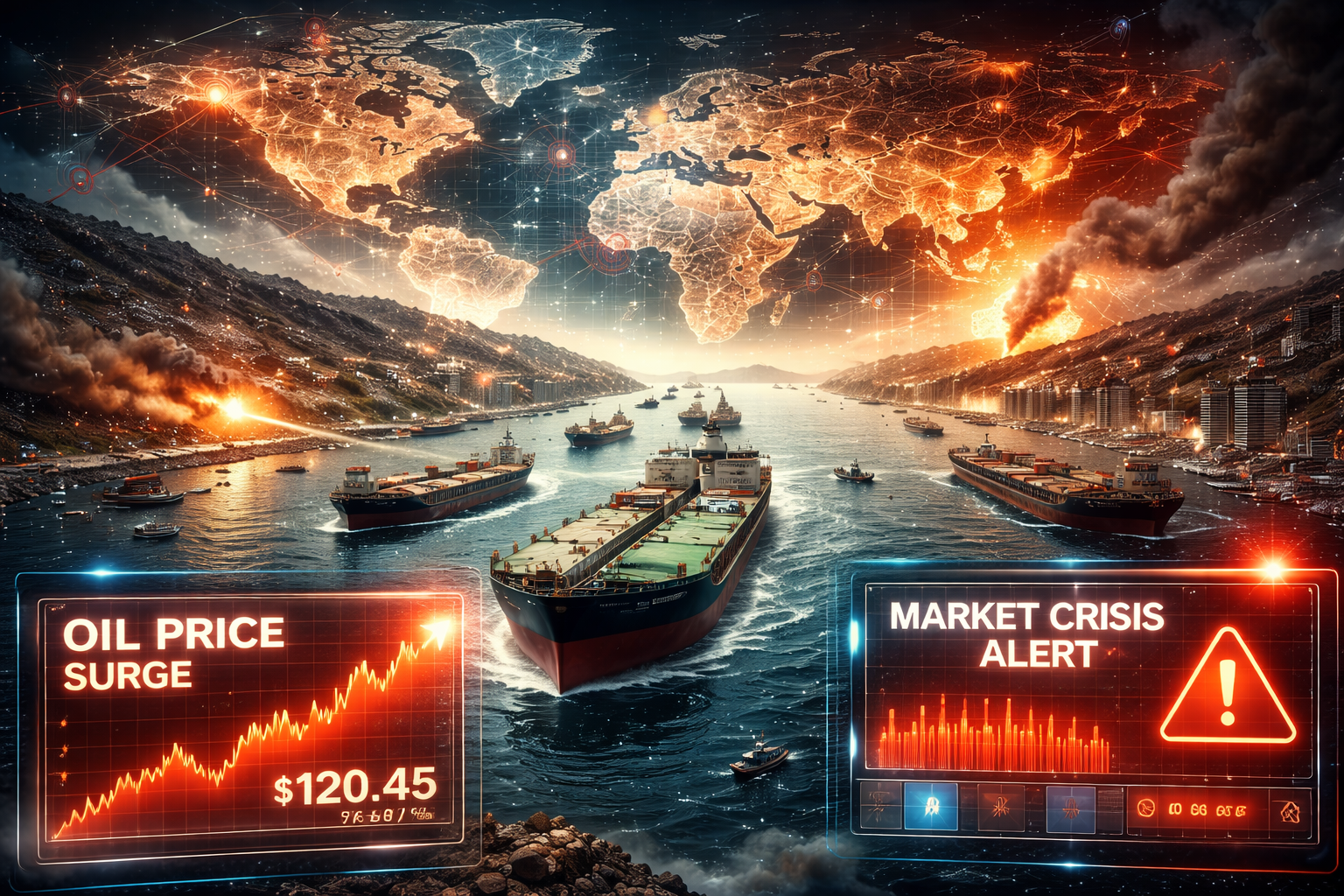
Introduction to Strait of Hormuz Oil Crisis
The Iran Strait of Hormuz closure April 2026 impact on oil prices live situation is a major geopolitical concern affecting global energy markets. The Strait of Hormuz is one of the world’s most important oil transit routes, and any disruption can trigger immediate price volatility.
This guide explains the potential consequences, market reactions, and global economic impact in a clear and structured way.
What Is the Strait of Hormuz?
The Strait of Hormuz is a narrow waterway connecting the Persian Gulf to the Arabian Sea. It is a critical route for global oil transportation.
Key Facts
- Around 20% of global oil passes through it
- Major exporters include Gulf countries
- It is a strategic geopolitical chokepoint
Why Iran’s Closure Threat Matters
The Iran Strait of Hormuz closure April 2026 impact on oil prices live scenario is significant due to global dependency on oil supply routes.
Main Reasons
- Rising geopolitical tensions
- Strategic control over oil shipping lanes
- Economic pressure tactics
- Regional security conflicts
9 Major Impacts on Oil Prices and Global Markets
1. Sharp Increase in Oil Prices
Oil prices can spike instantly due to supply disruption fears.
2. Supply Chain Disruption
Global oil shipments face delays and rerouting.
3. Increased Shipping Costs
Insurance and transport costs rise significantly.
4. Inflation Pressure Worldwide
Higher fuel prices increase overall inflation.
5. Stock Market Volatility
Energy and transport stocks experience fluctuations.
6. Energy Security Concerns
Countries rush to secure alternative oil sources.
7. Currency Market Impact
Oil-importing nations may see currency depreciation.
8. Strategic Oil Reserve Usage
Countries may release emergency reserves to stabilize markets.
9. Long-Term Energy Policy Changes
Accelerates shift toward renewable energy investments.
Live Market Reaction Overview
In scenarios like the Iran Strait of Hormuz closure April 2026 impact on oil prices live, markets react within minutes:
- Brent crude prices surge rapidly
- WTI oil futures increase sharply
- Energy stocks become highly volatile
Global traders closely monitor geopolitical updates in real time.
Countries Most Affected
Oil Importers
- India
- China
- European Union countries
- Japan and South Korea
Oil Exporters
- Saudi Arabia
- UAE
- Iraq
- Kuwait
Role of Global Energy Agencies
Organizations like International Energy Agency monitor supply risks and provide emergency coordination during crises.
Their role includes:
- Market stabilization reports
- Emergency oil release coordination
- Energy security analysis
Economic Consequences
Short-Term Effects
- Fuel price spikes
- Transport cost increases
- Market uncertainty
Long-Term Effects
- Shift to alternative energy
- Investment in energy security
- Diversification of supply routes
Possible De-escalation Scenarios
Even in crisis situations, outcomes may include:
- Diplomatic negotiations
- Partial reopening of routes
- International intervention
- Maritime security agreements
Risk Management Strategies
For Governments
- Strategic petroleum reserves
- Diversified import routes
- Energy policy adjustments
For Businesses
- Fuel hedging strategies
- Supply chain diversification
- Cost optimization planning
FAQs
1. What is the Strait of Hormuz importance?
It is one of the world’s most critical oil shipping routes.
2. How does Iran’s closure affect oil prices?
It causes immediate price spikes due to supply disruption fears.
3. Which countries are most affected?
Oil-importing nations like India, China, and European countries.
4. Can oil prices stabilize quickly?
Yes, if diplomatic or supply solutions are implemented.
5. What is the role of the International Energy Agency?
It monitors energy markets and helps stabilize global supply.
6. Is this impact permanent?
No, effects depend on how long the disruption lasts.
Conclusion
The Iran Strait of Hormuz closure April 2026 impact on oil prices live scenario highlights how geopolitical tensions can quickly influence global energy markets. Oil prices, supply chains, and economic stability are all directly affected.
Monitoring updates from organizations like International Energy Agency is essential for understanding real-time developments and market reactions.